Sydney Sports Podiatry
Evidence-Based Orthotic Therapy
There are various clinical approaches to orthotic therapy. At Sydney Sports Podiatry, we believe that for patients with hypermobility (ligamentous laxity), a management plan must address joint stability. While some techniques focus solely on joint mobilisation, our clinical experience suggests that for hypermobile patients—especially those with associated calf tightness—structural support is often required to achieve long-term comfort.
The Role of Shell Stiffness
The effectiveness of an orthotic shell is often related to its ability to manage the forces placed upon it. During walking, the foot can experience up to twice your body weight in force; during running, this can increase to three or four times. For an athlete weighing 70kg, this equates to significant impact forces.
We prescribe orthotic shells with a degree of flexibility tailored to your weight, activity level, and footwear requirements. If a device is too flexible, it may not provide the structural support needed to manage these forces effectively. Conversely, we use high-quality top covers to ensure that support does not come at the expense of comfort.



Assessing Leg Length Discrepancy (LLD)
A commonly complex factor in chronic lower limb and postural discomfort is a leg length discrepancy. Our principal podiatrist, Andrew Bull, has a dedicated interest in this area, having lectured internationally on the topic. We perform a series of clinical checks to differentiate between a structural discrepancy and a functional one (such as pelvic rotation). Where necessary, we refer patients for diagnostic imaging to ensure an accurate measurement before incorporating lifts into a management plan.
Quality Manufacturing
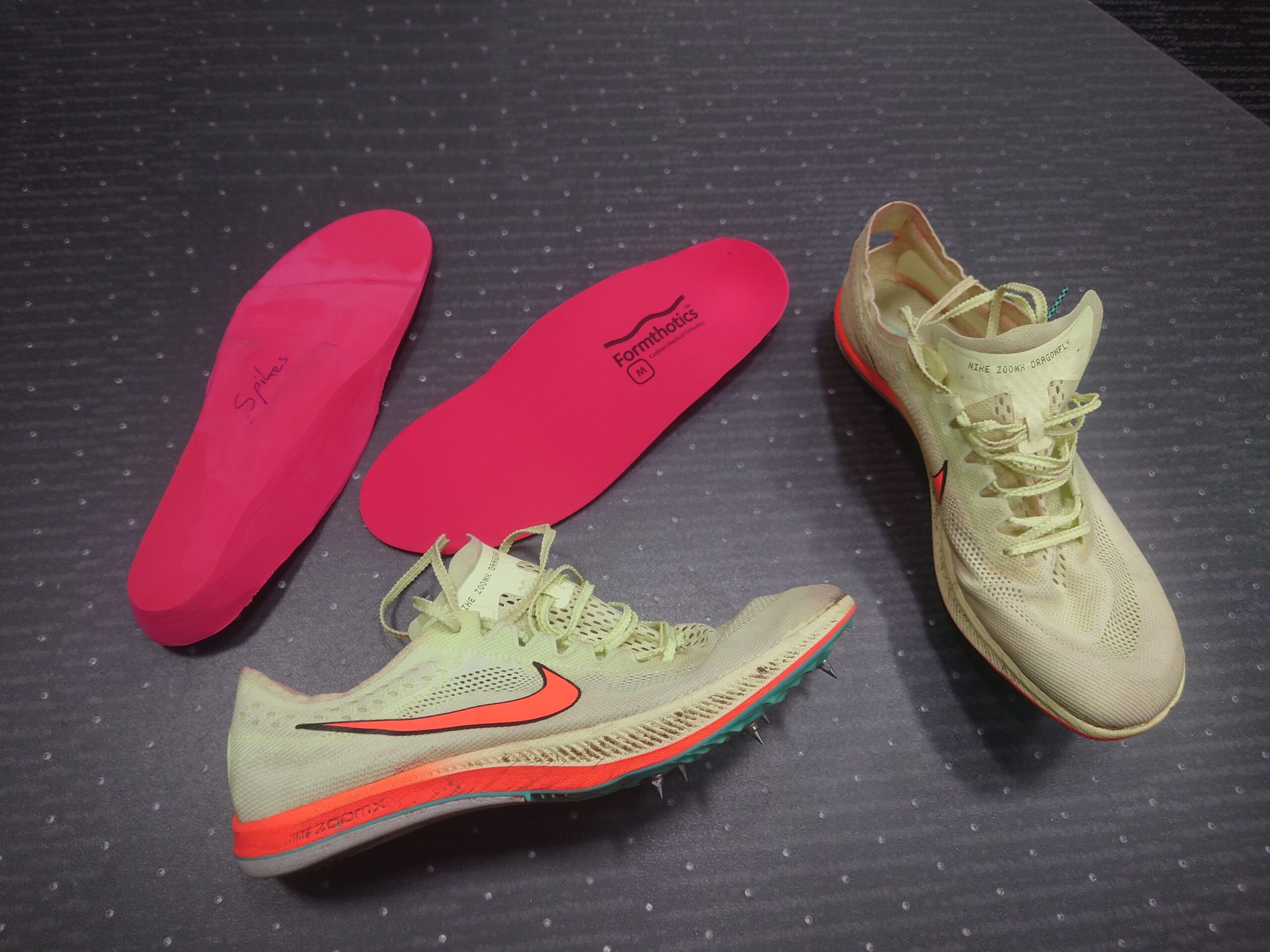
We partner with a technical orthotic laboratory to ensure our devices meet high clinical standards. We see a high rate of patients returning to order additional pairs for their various footwear, which we believe reflects the suitability and comfort of our designs.
Materials: Carbon-Fibre Composite vs. Polypropylene
When designing your custom orthotics, we select materials based on your specific clinical needs. We often utilise carbon-fibre composite for the following reasons:
- Reduced Profile: Carbon-fibre is significantly thinner than traditional polypropylene, allowing for a better fit in a wider range of shoes without sacrificing strength.
- Lightweight Structural Integrity: It offers a high strength-to-weight ratio, reducing the overall weight of the orthotic while maintaining necessary support.
- Energy Return: Carbon-fibre provides a responsive “spring” and return rate that many athletes find beneficial during high-impact activity.
While we frequently recommend carbon-fibre for its slim profile and comfort, we also utilise EVA and polypropylene where they are clinically indicated—such as for paediatric patients or specific high-pressure requirements—to ensure the most appropriate support for your specific foot type.
Visit One of Our 4 Sydney Clinics

Sydney Sports Podiatry Blog
View the latest from our Sydney Sports Podiatry Blog for information on lower limb health and injury management